
Creating art and finding people who want to collect it are two very different challenges. The internet lets contemporary artists show their work internationally, but thousands of artworks now compete for the same collector's attention. For emerging artists, the question is no longer only where to sell art online. It is how to get discovered, build credibility and turn interest into a first sale.
In this guide
|
Why is it so difficult for artists to get discovered?
The global art market generated an estimated $59.6 billion in sales in 2025, according to the Art Basel and UBS Art Market Report 2026. Access to this market remains highly competitive.
Industry estimates suggest there are approximately 5 million active professional artists worldwide, while estimates of the number of galleries vary, with some placing the figure at around 25,000. These figures are approximate rather than a comprehensive global census, but they illustrate the imbalance between artistic production and traditional representation opportunities.
A gallery cannot represent every promising artist. Nor can a collector discover every interesting artwork. For artists, visibility is often the first major obstacle.
Why Instagram and your own website may not be enough
Instagram is an important tool for contemporary artists. It gives audiences a glimpse into an artist's practice and allows relationships to develop beyond exhibitions. But followers are not necessarily collectors.
Building an audience requires consistent content production, professional photography and often paid advertising. Even a successful account may struggle to reach people who are actively looking to buy original artworks.
A personal website presents a similar challenge. It gives you control over your portfolio, but without SEO, publicity or advertising, attracting visitors can be expensive.
| Our advice: treat Instagram and your website as essential parts of your professional identity, but do not depend on them as your only sales channels. |
Art gallery or online art marketplace?
If you want to reach collectors beyond your immediate network, consider two additional routes.
Option 1: Find gallery representation
A good gallery can help develop an artist's career through exhibitions and introductions to collectors. Established galleries may also offer curatorial guidance and institutional connections. However, representation is selective.
- Research galleries before approaching them: their programmes, the artists they represent and the kind of work they exhibit.
- Send a concise portfolio with a personalised introduction explaining why your practice fits their programme.
Option 2: Join a curated art marketplace
For artists who are not yet represented by a gallery, an online art marketplace can offer another route to potential collectors. Marketplaces can be useful for testing demand, making initial sales and understanding how buyers respond to your work.
An early sale is valuable experience. You learn how collectors evaluate artworks, what information they need and which questions influence their decisions. However, not all marketplaces offer the same opportunities.
How to choose the right online art marketplace
1. Consider the size of the catalogue
A large marketplace may have significant traffic, but it can also feature tens of thousands of artworks. Your work may compete with an enormous number of listings, which makes organic discovery difficult. Look for platforms with clear categories, relevant curation and a manageable browsing experience.
At ArtXchange we take a focused approach, with a curated selection organised into clear categories so collectors can find the kind of art they are looking for. You can browse our contemporary paintings to see how works are presented.
2. Check whether you have to pay for visibility
Some art marketplaces offer paid promotional placements, featured listings or advertising packages. Before joining, find out whether you will need an additional marketing budget to make your work visible, and ask how artworks are selected for homepage features, editorial content and promotional campaigns.
ArtXchange does not charge artists for listing their work or for promotional placement within our catalogue. We manage the platform's marketing ourselves rather than asking artists to pay for extra visibility. This does not guarantee that every artwork will sell, but it removes an upfront cost for participating artists.
3. Understand the marketplace's commission
A free listing does not necessarily mean a commission-free sale. Most marketplaces earn revenue by taking a percentage of the selling price. Commission structures vary, so compare the amount you actually receive rather than focusing only on the advertised percentage.
| Example (hypothetical): if a painting sells for $1,000 and the platform's commission is 30%, the artist receives $700 before any other applicable costs. |
At ArtXchange, artists can list their works without an upfront fee. Our commission is included in the displayed selling price and applies when a sale takes place. Before agreeing to sell through any marketplace, clarify the commission rate, the payment schedule, shipping responsibilities and return conditions.
4. Find out who the marketplace is trying to reach
A platform specialising in decorative prints serves a different audience from one focused on original contemporary artworks. Look at the marketplace's positioning and the types of collectors it attracts.
ArtXchange focuses on original contemporary art for collectors and design professionals, including interior designers looking for distinctive works for their projects. This matters because an artwork needs to reach people who are interested in its artistic value, not only people browsing for decoration.
How to present your artwork so collectors notice it
Uploading an image and entering the dimensions is not enough. Collectors browsing online cannot experience the physical piece, so your presentation must help them understand what they are looking at and why it matters.
Professional photography is essential
One of the most common problems with online submissions is poor photography. A compelling painting can lose its impact when photographed at an angle, under uneven lighting or with inaccurate colours. Before submitting your work, prepare:
- A high-resolution, straight-on photograph of the complete artwork
- Detail photographs showing texture, brushwork and important elements
- A photograph that communicates the artwork's scale
- Accurate information about the medium, dimensions and materials
- A short video showing the artwork from different angles, particularly if its surface or texture is important
We encourage artists to provide additional visual materials wherever possible. Video can be especially useful for works whose physical qualities are difficult to capture in a single image.
Tell the story behind your artwork
At ArtXchange we believe that understanding the concept behind a work is an essential part of discovering contemporary art. A collector needs more than a title, dimensions and a list of materials. A painting may explore memory, identity or a particular social experience. An abstract composition may have a deeply personal origin. These ideas deserve to be communicated.
When you submit an artwork, try to answer a few questions:
- What inspired you to create this work?
- What idea or question were you exploring?
- Is there a metaphor or symbolism behind the composition?
- Why did you choose this particular medium or visual language?
- How does this piece relate to your broader artistic practice?
You do not need an academic essay. A few thoughtful paragraphs in your own words can be far more compelling than a generic description.
| Generic | With the story |
|---|---|
| "An original abstract painting in blue and grey, acrylic on canvas, 80 × 100 cm." | "This painting began with my memories of a coastal town I visited as a child. The blurred horizon reflects how familiar places change in our memory, while the repeated blue forms suggest the distance between the place itself and what we remember of it." |
The second description gives the collector something to connect with. At ArtXchange we want artists to communicate the meaning of their work, not only its technical specifications.
Prepare a strong artist biography
Your biography should help collectors understand your background without overwhelming them with detail. Include your artistic practice, education where relevant, exhibitions and significant professional achievements.
If you are at the beginning of your career, do not worry about a limited exhibition history. Explain what motivates your practice and how your work is developing. Authenticity matters more than exaggerated credentials.
How to make your first art sales online
If you are an emerging artist, your initial goal should be to find the right audience and learn from its response.
- Start with a coherent selection of your strongest works.
- Keep pricing consistent across your website, social media and marketplaces. Conflicting prices can undermine collector confidence.
- Pay attention to which works generate enquiries and what collectors ask about them.
- Do not assume that a lack of immediate sales means your work has no market. Collecting decisions can take time, particularly when buyers are discovering an artist for the first time.
A carefully chosen marketplace can help you test interest while you continue to develop your independent practice.
Why artists choose ArtXchange
ArtXchange is a curated contemporary art marketplace connecting emerging and mid-career artists with collectors and design professionals. We believe discovering contemporary art should involve more than scrolling through an endless catalogue, so we combine a focused selection of original artworks with an emphasis on the ideas behind them.
Artists can present their work without paying listing fees or buying promotional placements. Our platform earns a commission when an artwork sells. If you would like to talk about showing your work with us, get in touch.
Final thoughts
There is no universal formula for selling art online. For most emerging contemporary artists, the strongest approach combines an independent professional presence with carefully chosen sales partners. Choose platforms that reflect your practice, understand their fees and pay attention to how your work will be presented.
Most importantly, do not underestimate the value of explaining your art. Collectors may discover a work because of its visual impact, but the story behind it can give them a deeper reason to remember it.
FAQ
How can an emerging artist get discovered online?
Use Instagram and a personal website as your professional base, then add a sales channel that reaches people who are looking to buy, such as a gallery or a curated marketplace. Good photography and a clear story behind each work help collectors notice and remember you.
Do online art marketplaces charge artists?
It varies. Some charge for listings or promotional placement, and most take a commission on sales. Before joining, clarify the commission rate, payment schedule, shipping responsibilities and return conditions. At ArtXchange, listing is free and the commission is included in the displayed price.
What photos does an artwork listing need?
A straight-on, high-resolution image of the whole work, detail shots of texture and brushwork, a photo that shows scale, and accurate information about medium and dimensions. A short video is useful when surface or texture matters.
What if my work does not sell right away?
That does not mean there is no market. Buyers who discover an artist for the first time often need time. Track which works get enquiries and what collectors ask, and keep your prices consistent across channels.
Sources
- The Art Basel and UBS Global Art Market Report 2026
- Contemporary Art Issue, "How Much Money Do Contemporary Artists Make?" (estimates of the global artist population; approximate figures based on differing industry definitions)
- Contemporary paintings, ArtXchange
Related Posts
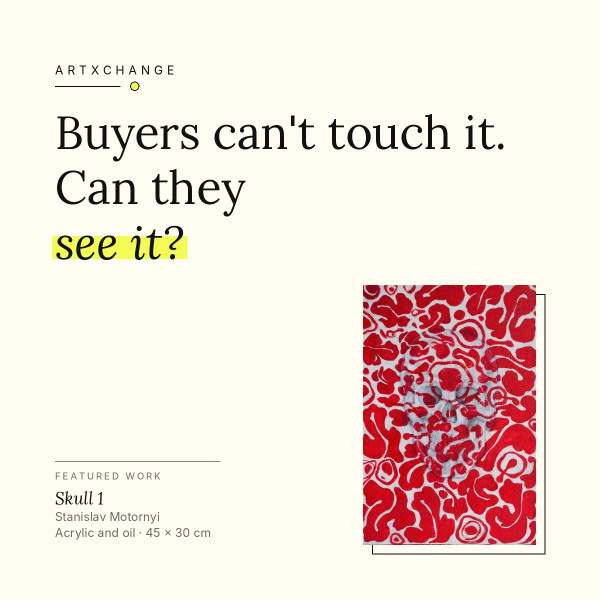
A one-hour setup for photographing paintings at home: choose the light, position the camera, avoid glare, match colour and add detail and scale shots, so collectors can see your work clearly.
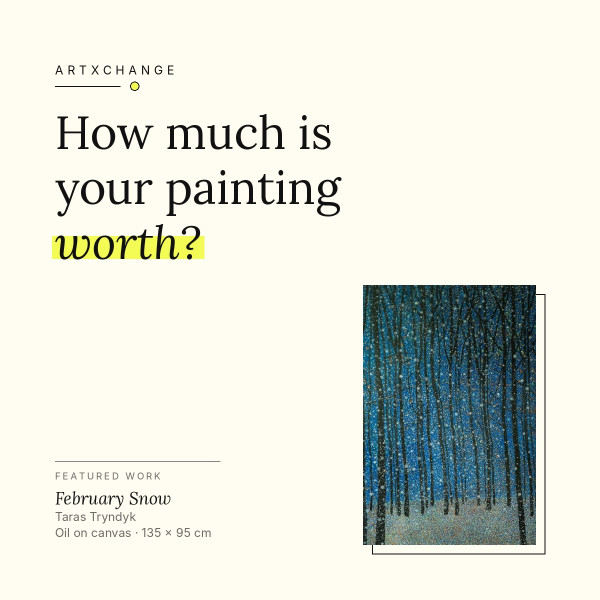
A step-by-step method for emerging artists to price a painting: set a base price from size, compare with similar work, count costs and commission, and explain the price to a buyer.
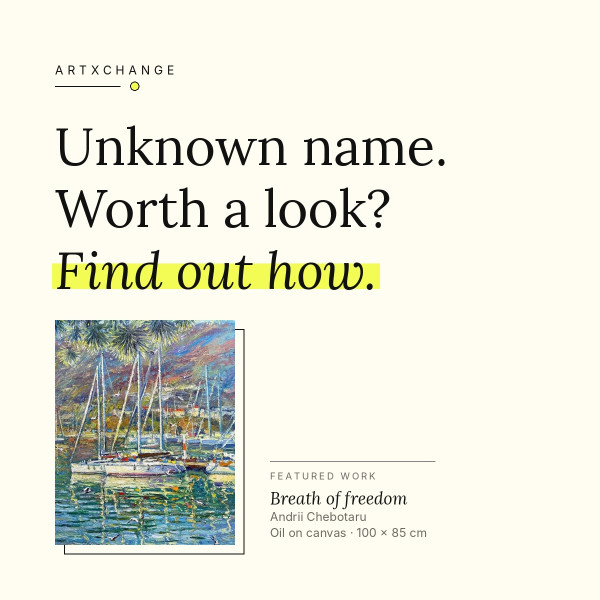
You found a painting you love, but the artist has no auction record. This guide shows what to check instead: the body of work, a verifiable CV, the logic of the price and the paperwork for the piece.