You have found a painting you keep returning to. The artist's name means nothing to you, and a search for auction results comes back empty. That is common when you buy art from emerging artists, and it says very little about whether the work is good or the price is fair.
In this guide
|
What helps instead is evidence from other places: the artist's body of work, a track record you can verify, the logic behind the price and the paperwork for the specific piece. This guide goes through that evidence in order.
To keep it concrete, we follow one hypothetical buyer, Maya, as she considers three real paintings listed on ArtXchange on 31 October 2026. What Maya finds about each artist comes from public pages we checked that day. Her decisions are invented for illustration.
|
|
|
| Painting | Artist | Medium and year | Size | Listed price |
|---|---|---|---|---|
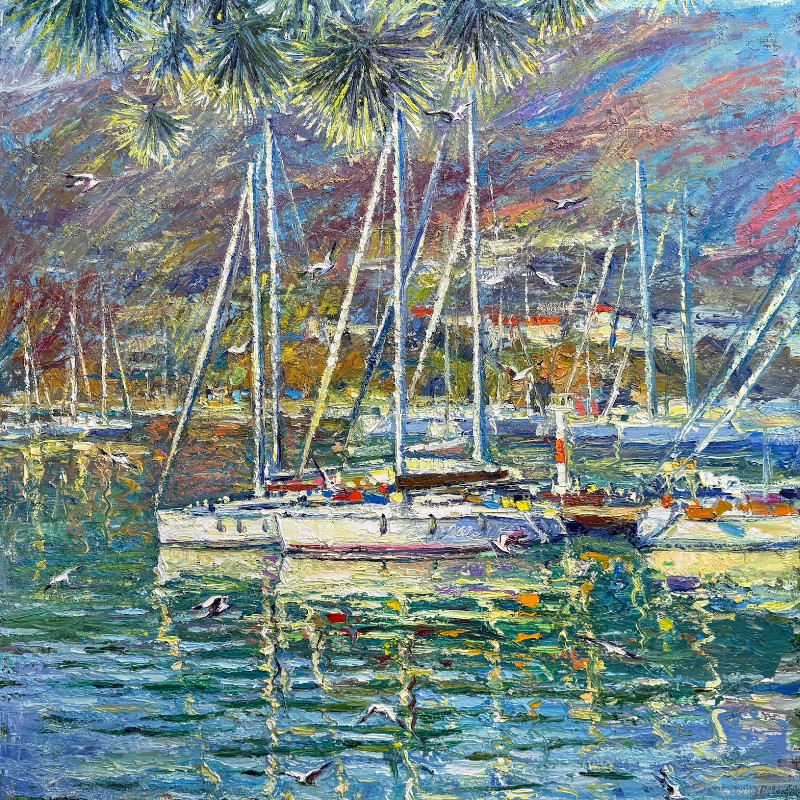
| Breath of freedom | Andrii Chebotaru | Oil on canvas, 2026 | 100 × 85 × 2 cm | $4,095 |
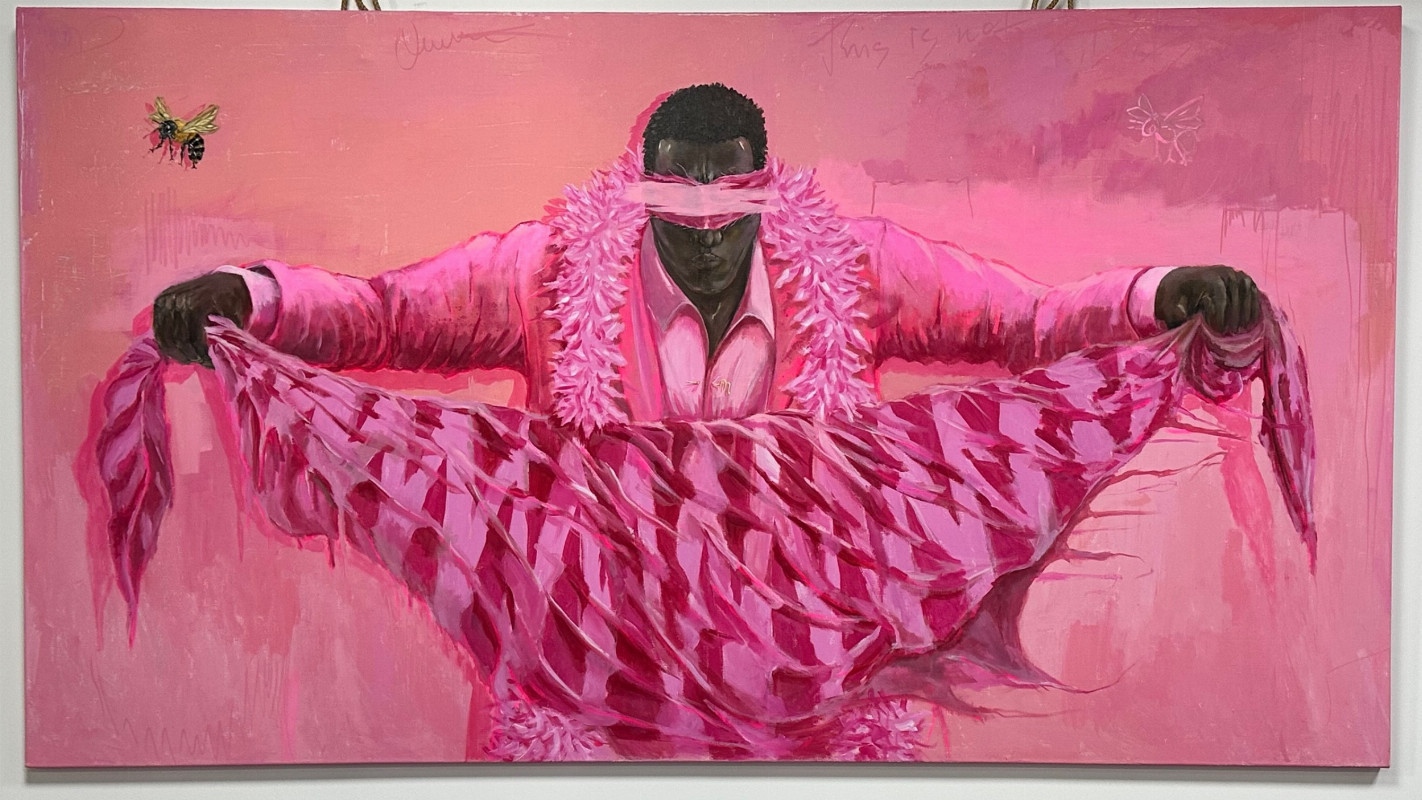
| Pink on the bee | Stanislav Motornyi | Acrylic and oil, 2025 | 120 × 200 × 2 cm | $12,867.39 |
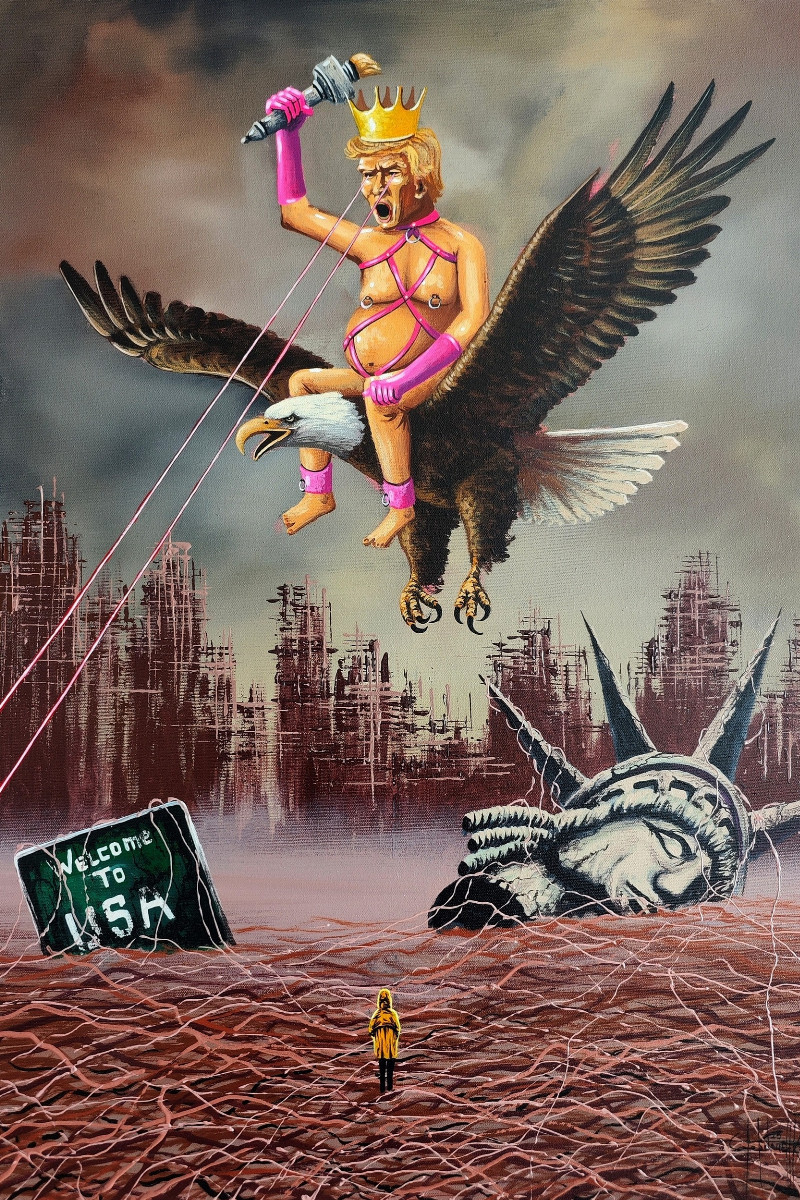
| Naked King | Eugene Gorbachenko | Acrylic on canvas, 2025 | 80 × 60 × 2 cm | $3,510 |
What the absence of an auction record tells you
A missing auction record means the work has not been resold in public yet. Auction results describe the secondary market, where works change hands for a second time. Emerging artists usually sell through the primary market: studios, galleries and fairs, where a work is sold for the first time.
An empty search is expected for a new artist. It leaves two things unanswered:
- Quality. No resale says nothing about whether the work is strong.
- Price benchmarks. There is no public price history to compare, so the seller's price rests on the gallery's own judgment.
If an emerging artist does have auction results, treat them as one more data point, not as proof. A pre-purchase checklist from art advisor Annelien Bruins suggests asking whether auction numbers differ from gallery prices, and whether a large gap could reflect speculation rather than steady demand (One Art Nation).
Look beyond the image that first caught your attention
One strong image is a reason to look further, not a reason to buy. If you are wondering how to evaluate an emerging artist, start with the rest of the work. Some writers on buying art recommend applying the same standard to an emerging artist as to an established one: look at a body of work before deciding, and, if time allows, follow the artist for a year or more.
Maya compares each painting with the artist's other work and asks three questions. Do the ideas develop from one series to the next? Is the handling of materials consistent? Do motifs return on purpose?
- Andrii Chebotaru. The gallery description of Breath of freedom ties it to his plein air practice and the coastal landscapes of Europe. Maya looks at his other large canvases on the site, such as Sails of freedom and Fairy day in Marmaris, to see whether the same approach runs through them.
- Stanislav Motornyi. ArtXchange shows a figurative painting (Pink on the bee), small still lifes such as Dutch still life with asparagus and currant, a landscape-titled work, Quiet fields, and a sculpture. Skulls recur across several titles, including Skull 1. Variety is not a flaw. Maya asks how the strands connect and which one is current.
- Eugene Gorbachenko. The listing for Naked King describes a political and symbolic image about power by an emerging Ukrainian artist. Maya looks at his other works on the site, such as Happiness car and At the intersection of technologies, to see how they relate to its themes. His page says watercolor is his main technique, while this painting is acrylic on canvas, so she asks how the two fit together.
Consistency does not mean sameness. An artist can change style and still show a clear line of thinking. The question is whether the painting Maya likes sits inside a practice or stands alone.
If possible, meet the artist or visit the studio. Collectors often do this with emerging artists, and it is the quickest way to hear how the work is made.
Read the CV, and verify the details
Knowing how to research an artist before buying mostly comes down to checking claims against primary sources. A CV is the artist's own account, so Maya treats each line as something to confirm. Here is what each of the three offers her.
Andrii Chebotaru: a long, dated record. His ArtXchange artist page says he was born in 1984, lives and works in Kyiv, and has been a member of the National Union of Artists of Ukraine since 2011. It lists training at the Samokysh Art School and at the National Academy of Fine Arts and Architecture in Kyiv (2007 to 2013), a personal project at the Council of Europe in Strasbourg in 2016, and work with Artgallery Keller in Graben-Neudorf since 2018. It also names art fairs, including ART Innsbruck and EuropArtFair Amsterdam, and exhibitions from 2004 to 2021. Maya can confirm the membership, the Strasbourg project and the fairs with the organizers' own records, and she asks which public collections hold his work.
Stanislav Motornyi: a short CV on the artist's page. His ArtXchange artist page says he was born in 1987 in Dnipro, combines engineering and art education, and lists exhibitions at a Museum of Contemporary Art between 2016 and 2019, including "Young Painters" (volumes 1 and 2) and "Surrealistic Art". Maya's next step is to ask which museum hosted each show and whether there is a catalogue or announcement.
Eugene Gorbachenko: a stated record with named venues. His ArtXchange artist page says he was born in 1993, lives and works in Marganets, studied practical psychology and learned painting in a local artist's workshop, and works mainly in watercolor. It lists participation in the All-Ukrainian fair at Andriyivskyi Descent in Kyiv, a painting selected for the top 50 of a 2018 competition held by the White World gallery, a personal and a group exhibition at Bilous Gallery in Vienna, and the Vilnius and New York art fairs. It adds that he has sold more than 150 paintings to private collections in many countries. Several entries have no year, so Maya asks for the years and checks the gallery and fair entries with the organizers.
Separate entries that sound alike but mean different things:
- Solo show, group show and two-person show are different levels of commitment.
- A show organized by a museum or established gallery differs from one in a rented space or an open call.
- A residency may be competitive or paid for by the participant.
- A museum acquisition means an institution holds the work. A mention in a publication does not.
Where to verify: the venue's or gallery's own website and archive, the gallery's artist roster, the school's site, and catalogues or reviews written by someone other than the artist. If a line cannot be confirmed anywhere, ask. A clear answer is useful information, and so is a vague one.
Understand the asking price
Without auction results, comparison has to come from elsewhere. Maya matches each painting on medium, size and period, then looks at the artist's own range. An advisor checklist poses a similar test: is the artist's price level consistent with that of their peers? The artist pages on ArtXchange make the first step easy, because each one shows an artist's works side by side.
| Artist | Works on the artist's page | Listed range (works checked) | Where the painting sits |
|---|---|---|---|
| Andrii Chebotaru | 4 | $4,095 to $11,700 | Breath of freedom ($4,095, 100 × 85 cm) is the lowest-priced of the four, a way into his work |
| Stanislav Motornyi | 17 (12 paintings checked) | $715 to $12,867.39 | Pink on the bee ($12,867.39, 120 × 200 cm) is the largest and sits at the top of the range; smaller works start at $715 |
| Eugene Gorbachenko | 7 | $1,040 to $3,770 | Naked King ($3,510, 80 × 60 cm) sits in the upper part of his range; works start at $1,040 |
Maya reads the table as a ladder, not a verdict. Works at the lower end are a way into an artist's practice: Dutch still life with asparagus and currant ($715) or Quiet fields ($910) by Motornyi, and Welcome to the new world ($1,040) or Happiness car ($1,560) by Gorbachenko.
A market reference for price per area. There is no public, market-wide price-per-area figure for emerging painters, because prices depend on medium, market and career stage. The closest published reference is pricing guidance used by working artists. One art-school guide gives $2 to $3 per square inch as a common starting rate once an artist sells to strangers, and describes about $5 per square inch as the point where a settled price list leaves room for other price points. One square inch is 6.45 cm², so those rates are roughly $0.31 to $0.47 and $0.78 per square centimeter.
| Reference | $ per cm² |
|---|---|
| Guide: common starting rate ($2 to $3 per sq in) | about 0.31 to 0.47 |
| Breath of freedom | 0.48 |
| Pink on the bee | 0.54 |
| Naked King | 0.73 |
| Guide: settled price list (about $5 per sq in) | about 0.78 |
All three paintings sit between a first-sales rate and a settled price list. Maya treats that as context, not a verdict. The guide is advice for artists, not sales data, and small works usually carry a higher rate per area than large ones, so she compares similar sizes. Prices also do not scale evenly with size, which is why she asks each seller how a price is set and whether it follows a scale by size and medium. A clear explanation does not prove the price is right, but it shows the seller has a method.
A published price is what the seller asks. A confirmed sale is what a buyer paid.
A website listing shows the first, not the second. Maya asks whether works at this price level by the artist have sold, and for an invoice or a gallery statement if the answer is yes.
Ask for evidence about the specific artwork
Research on the artist does not replace checks on the object. Before paying, Maya asks for:
- More images. Full front, the back, corners, signature and close-ups of surface details.
- Condition. A written note on any damage or restoration. If the work uses unusual materials, ask about conservation, since they can cause problems after purchase.
- Materials and dimensions. Medium, support, size with and without frame.
- Signature and edition. Where and how the work is signed, and the edition size if it is a print.
- History. Exhibition history of this work, and who owned it before if it was not sold directly by the artist or gallery.
Documents to receive with the purchase include a certificate of authenticity signed by the artist, a sales invoice listing artist, title, medium, dimensions, edition number if relevant and a condition note, plus high-resolution images (One Art Nation).
A certificate has limits. It states that a work is by the artist, but it does not describe ownership history, so a letter or invoice trail is a separate record to ask for. On ArtXchange, the site states that a certificate signed by the author comes with every artwork.
Where Maya lands
Maya does not decide yet. Each painting gives her something to stand on and something to ask.
| Painting | What Maya can confirm | What she asks next |
|---|---|---|
| Breath of freedom | A dated exhibition and fair record, membership of the National Union of Artists of Ukraine since 2011, training in Kyiv, and the lowest price of the four works on his page | Documents for the Strasbourg project and the fairs, and which public collections hold his work |
| Pink on the bee | Medium, size, year, price, the artist's statement and a short CV on his artist page | Which museum hosted each show, what the rights label (Public Domain / CC0) means, and how the price was set |
| Naked King | Gallery and fair entries on his page, a 2018 competition selection, and other works by him from $1,040 | The years of the Vienna shows and the fairs, and what separates this price from another painting of the same size |
Questions are a normal part of buying art. Maya can send hers through the ArtXchange contact page, or browse more originals in the paintings catalog.
Signals at a glance: what each one proves and what it does not
Use this table as a working sheet. Each row pairs something you can find with the limit of what it tells you and a question for the seller.
| Signal | What it confirms | What it does not prove | What to ask the seller |
|---|---|---|---|
| No auction record | No public resale data yet | Quality of the work, or future resale value | Has any work by this artist been resold? Where? |
| Consistent body of work | A sustained practice with developing ideas | Critical or market success | Can I see earlier series and recent work? |
| Solo show | A venue or gallery committed to the artist | Institutional recognition | Who organized it, and is there a catalogue or review? |
| Group show | The artist took part | That a curator selected the artist | Was it curated, an open call or self-funded? |
| Residency or award | Some body selected the artist | Market demand | What was the selection process? |
| Museum acquisition | An institution holds the work | The price level of other works | Which museum, and is there a collection record? |
| Gallery representation | A gallery stands behind the artist now | That it will continue, or that works resell | How long has the artist been represented? Is it exclusive? |
| Asking price | What the seller wants | That works sell at that price | Have works at this level sold? |
| Certificate of authenticity | The seller vouches for authorship | Condition, ownership chain or value | Who signs it, and what does it list? Will I get an invoice too? |
| Press or social following | Visibility | Sales or critical standing | Who wrote the coverage, and is it independent of the artist? |
Know what your research cannot establish
Even thorough research cannot tell you whether the work will be worth more later. Fame, a respected gallery or a prize can make resale more likely, but none of them guarantees it. Outcomes in emerging art are uncertain, and market validation, if it comes, usually takes years.
For Maya, this means:
- Buy only if she would be glad to own the painting even if it never changes in price.
- Avoid placing a whole art budget on one artist or one work. Spreading purchases across several works lowers the risk.
- Treat any promise of future returns from a seller as marketing, not as information.
| Key takeaway: The research in this guide narrows the risks of authorship, condition and price. It does not remove the risk of the market. |
The questions to ask before you buy
Copy this list into an email or keep it open during a viewing. Collecting emerging art goes better when each answer is written down.
About the artist
- Can I see more work, including earlier series?
- Which exhibitions on the CV were curated, and by whom?
- Since when is the artist represented by your gallery, and is it exclusive?
- Is any work by this artist in a public or institutional collection?
About the price
- How was the price set, and does it follow a scale by size and medium?
- Have works at this price level by this artist sold? How many?
- Which comparable artists did you consider?
About the artwork
- Can I have photographs of the back, corners, signature and surface details?
- What is the condition, and has it been restored or repaired?
- What are the materials, and are there any conservation concerns?
- Has the work been exhibited, and was it owned by anyone before?
- Will I receive a signed certificate of authenticity and an itemized invoice?
If an answer is slow, vague or defensive, treat that as information. A seller who knows the work well will usually answer these questions easily.
FAQ
Is it risky to buy art from emerging artists?
Prices cannot be predicted, and many artists never reach the resale market, so the honest answer is yes. The risks you can reduce are authorship, condition and price, and the steps above address them.
Where can I buy art from emerging artists?
Common routes are degree shows and open studios, galleries and fairs, studio visits and online platforms. Whichever you choose, ask the questions in the question list above. You can also browse original works in the ArtXchange paintings catalog or look through the artists on the site.
How do I check an emerging artist's CV?
Match each entry to the venue's own website or catalogue, and ask for documents for claims you cannot verify, such as awards or collection placements.
Sources
Facts about the paintings and artists come from the ArtXchange pages below, as of 31 October 2026.
- Breath of freedom, ArtXchange
- Pink on the bee, ArtXchange
- Naked King, ArtXchange
- Andrii Chebotaru, artist page, ArtXchange
- Stanislav Motornyi, artist page, ArtXchange
- Eugene Gorbachenko, artist page, ArtXchange
- How to Price Artwork: The Square-Inch Formula, Milan Art Institute (J. Dunn, 12 August 2025)
- Module 3 Pre-Purchase Checklist, One Art Nation (A. Bruins)
- Shopping for art, Sarasota Magazine
- Certificates of Authenticity, Arternal
Put these tips into practice as you browse original paintings by contemporary artists.
Related Posts
A one-hour setup for photographing paintings at home: choose the light, position the camera, avoid glare, match colour and add detail and scale shots, so collectors can see your work clearly.
A step-by-step method for emerging artists to price a painting: set a base price from size, compare with similar work, count costs and commission, and explain the price to a buyer.
Two paintings of the same size can cost very different amounts. Learn how galleries and artists set prices, what the gallery share covers and how to compare a price.