
For most of the last century, a visitor to a Western museum could walk past Ukrainian art without knowing it. Paintings made in Kyiv, Kharkiv and Odesa hung under labels that said “Russian”, and artists born and trained in Ukraine were filed under another country’s name. That has been changing quickly. Museums have corrected their captions, a major exhibition of Ukrainian modernism toured Europe, and many people now search for Ukrainian art for the first time, curious about what they had been missing.
This guide is a short way in. It follows the tradition from icons and folk ornament to the avant-garde of the 1910s and 1920s, explains what makes a Ukrainian art style recognisable, and ends with the painters working in Ukraine now, whose original work you can own.
Ukrainian art history in brief
Ukrainian art is the visual tradition of Ukraine: medieval icon painting, a rich folk ornament, an early twentieth-century avant-garde centred on Kyiv and Kharkiv, and a contemporary scene that is active today, through the war.
For centuries the dominant form was sacred painting. Icons and church murals set the colors, the flat golden grounds and the rhythm of figures that later artists returned to again and again. Alongside them grew a domestic, village art of painted walls, embroidered cloth, decorated eggs and carved wood, made by people who never thought of themselves as artists at all.
The two streams met in the early 1900s, when young painters from Ukraine studied in Paris and Munich, came home and began to mix what they had seen with what they had grown up with. The result was one of the most inventive moments in European modern art, and also one of the most tragic, because many of its makers did not survive the 1930s.
Traditional Ukrainian art: icons, Petrykivka and folk ornament
When people search for traditional Ukrainian art, they usually mean the folk forms: the embroidered shirt called the vyshyvanka, the painted Easter egg, the pysanka, and Petrykivka painting, the bright floral decoration that takes its name from a village in the Dnipropetrovsk region and is listed by UNESCO as intangible cultural heritage.
The best-known folk painter of the twentieth century is Maria Prymachenko (1909–1997), who taught herself to paint in a village near Kyiv and filled her sheets with fantastic beasts, flowers and birds. UNESCO dedicated the year 2009 to her. In 2022, during the invasion, the museum in Ivankiv that held a large group of her works burned, and around twenty-five of them were reported lost. Her images are now among the most widely shared pictures of Ukraine anywhere.
Ukrainian art movements of the 20th century
The first great modern movement grew around Mykhailo Boychuk (1882–1937). His circle in Kyiv, the Boychukists, built a “monumental-synthetic” style from Byzantine and early Italian painting, medieval icons and Ukrainian folk art, and they painted murals, portraits and village scenes in calm, flattened forms. Stalin’s regime branded Boychuk a “bourgeois nationalist”, and he was executed in 1937. Historians count him among the Executed Renaissance, the generation of Ukrainian writers and artists killed in the purges.
At the same time Kyiv and Kharkiv produced a wave of avant-garde painters. Oleksandra Ekster and Oleksandr Bohomazov moved between Cubism and Futurism, and in the 1920s the Kyiv Art Institute drew teachers such as Kazimir Malevich. Because Ukraine was part of the Russian Empire and then the Soviet Union, Western museums described much of this work as “Russian” for decades. In March 2023 the Metropolitan Museum of Art renamed Edgar Degas’s Russian Dancers as Dancers in Ukrainian Dress and reidentified several artists as Ukrainian, as Smithsonian Magazine reported. The touring exhibition In the Eye of the Storm: Modernism in Ukraine, 1900–1930s brought Boychuk, Ekster, Bohomazov and their contemporaries to Madrid, Cologne, Brussels and finally the Royal Academy of Arts in London in 2024.
What makes a Ukrainian art style recognisable?
There is no single Ukrainian art style, but a few threads run through it and you will start to notice them. One is ornament: rhythm, repetition and strong color, inherited from embroidery and Petrykivka. Another is the icon’s way of flattening space and letting color carry meaning. A third is landscape, the wide steppe, the Dnipro and the light over the Black Sea coast, which painters keep coming back to.
And there is a sense of history pressing on the present. Many of today’s artists paint through the war, and some of them address it directly, through symbol, satire or quiet still life. Others answer it by painting what is still there: a river at night, a field in summer, a city they refuse to leave.
Ukrainian art paintings by artists working today
The contemporary scene is the part of Ukrainian art you can actually live with. Painters working in Kyiv, Dnipro and smaller towns exhibit at home and abroad, and their originals are within reach of private collectors in a way that the museum pieces above never will be.
Their work covers the whole range of the tradition. Some paint landscape in a pointillist, light-filled hand; others move between landscape and abstraction in large, calm acrylics; others use figures and symbols to question the war and the promise of peace. If you are new to collecting, it is a good place to start, because you can follow an artist’s career as it develops, ask about a work directly and buy the original rather than a reproduction.
 |
 |
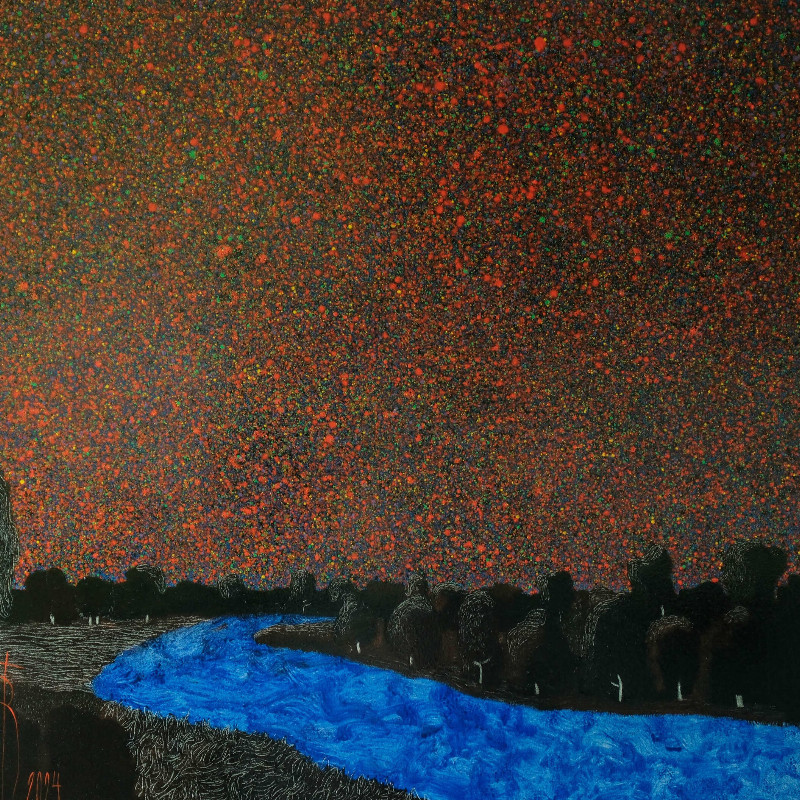
| Yamburg, Dnipro Taras Tryndyk 115 × 135 cm · $6,800 View artwork → |
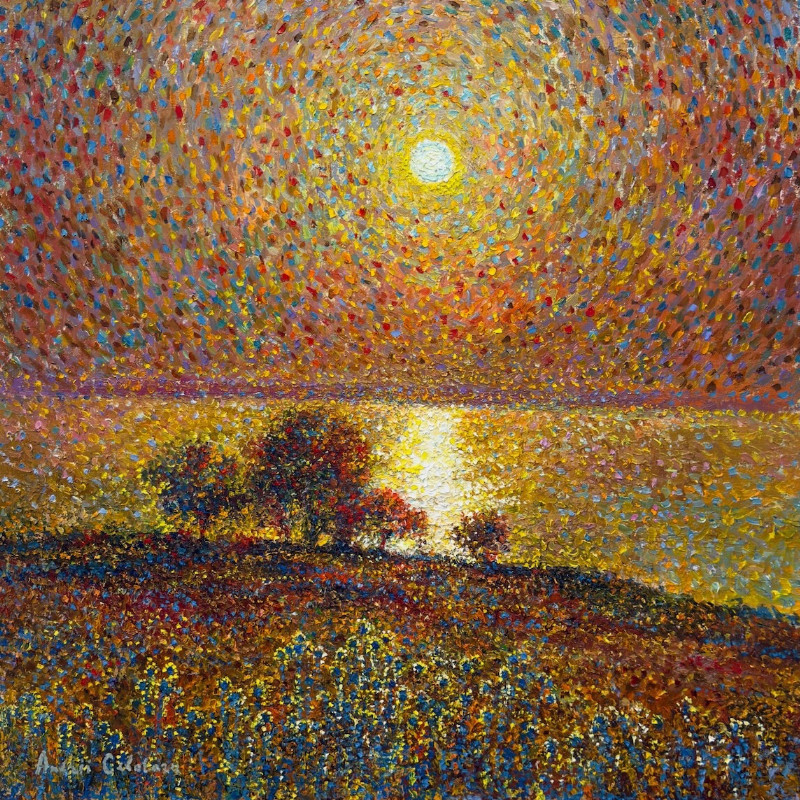
Radiance of silence Andrii Chebotaru 90 × 100 cm · $6,800 View artwork → |
 |
<img src=“https://xchangeart.com/396-large_default/peace-agreement.jpg” alt=““Peace” Agreement by Eugene Gorbachenko, original painting, 80 × 60 cm” style=“width:100%;max-width:100%;height:auto;margin:0;” /> |
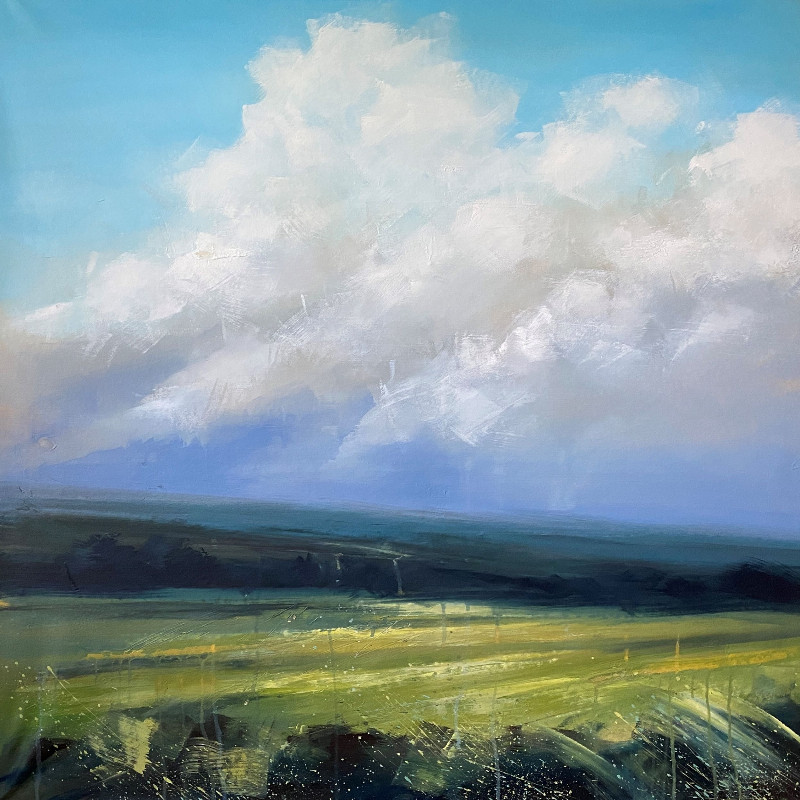
| Breathe Slowly/2 Helen Mount 90 × 90 cm · $1,183 View artwork → |
“Peace” Agreement Eugene Gorbachenko 80 × 60 cm · $3,944 View artwork → |
How to buy Ukrainian art from abroad
Most first-time buyers worry about the same things: whether the work is original, whether it will arrive safely and what it will cost to bring home. Before you buy, check that the listing gives the medium and the size as height × width, that the work comes signed with a certificate of authenticity, and that shipping and returns are explained before checkout.
On ArtXchange every work by a Ukrainian artist ships with a certificate of authenticity, and the shipping and returns terms are on the site before you pay. You can read each painter’s story on our artists page or browse all original paintings by Ukrainian artists.
 |
 |
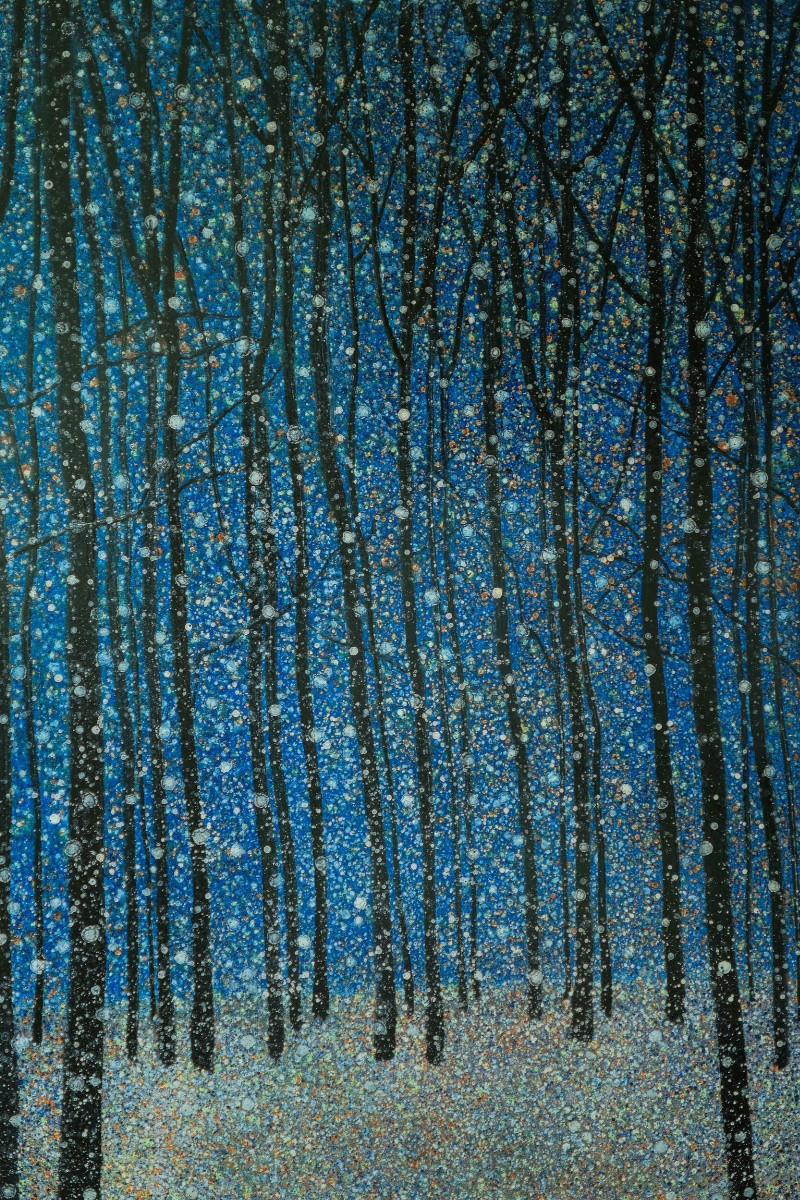
| February Snow Taras Tryndyk 135 × 95 cm · $5,440 View artwork → |
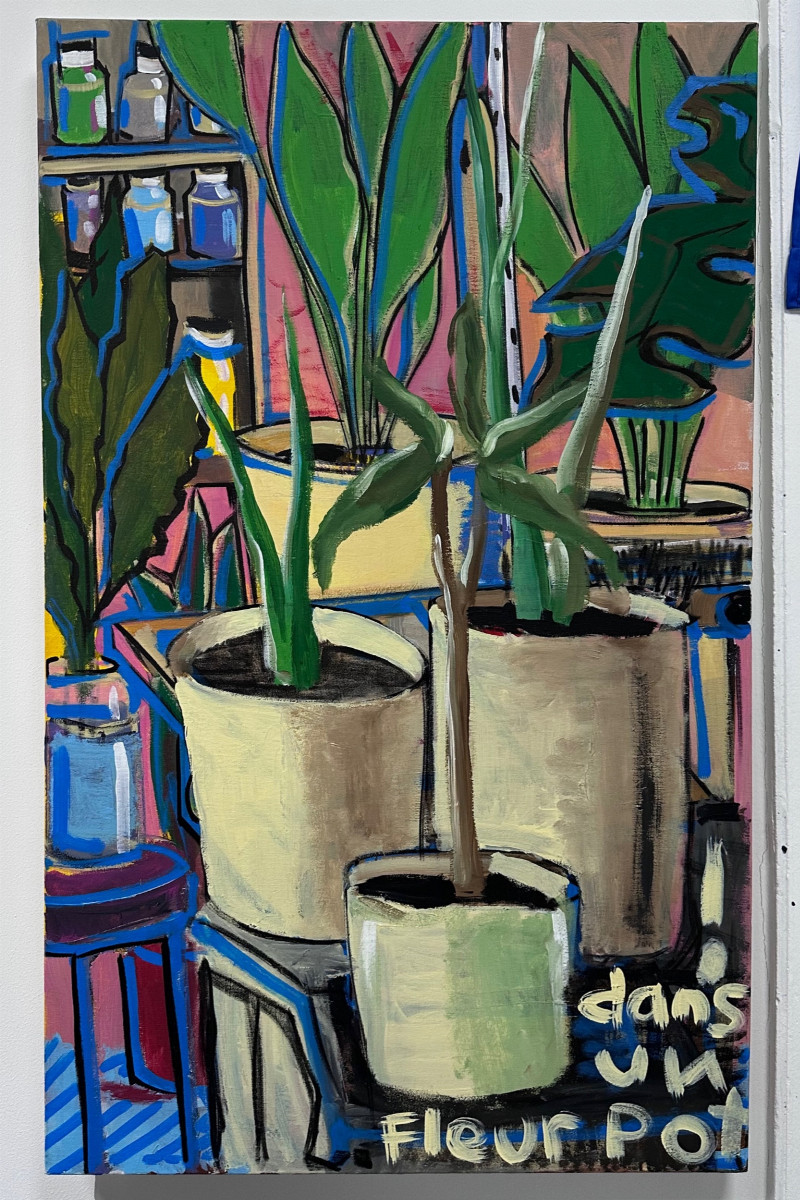
Studio green Stanislav Motornyi 100 × 60 cm · $2,040 View artwork → |
Where to start
The best introduction to Ukrainian art is to look widely and slowly: a museum catalogue for the avant-garde, a book of Prymachenko’s paintings, and then the work of one living artist whose pictures you keep returning to. That last step is the one that turns curiosity into a collection.
Frequently asked questions
What is traditional Ukrainian art?
Traditional Ukrainian art covers the folk forms made in villages for everyday and festive life: embroidered shirts (vyshyvanka), painted Easter eggs (pysanky), wood carving and Petrykivka decorative painting, which UNESCO lists as intangible cultural heritage. These forms share bright color, ornament and plant motifs, and they still influence Ukrainian painters today.
Who are the most famous Ukrainian artists?
Among the best known are the folk painter Maria Prymachenko, the modernist Mykhailo Boychuk and his school, the avant-garde painters Oleksandra Ekster and Oleksandr Bohomazov, and Kazimir Malevich, who taught in Kyiv. Today a new generation of painters works in Kyiv, Dnipro and other cities, exhibiting in Europe and selling to collectors abroad.
What is the Ukrainian art style?
There is no single style, but common threads run through Ukrainian art: rhythmic ornament and strong color from folk art, the flat space and symbolic color of icon painting, and a deep attachment to landscape. Modernists in the 1910s and 1920s combined these with Cubism and Futurism, and many contemporary painters continue that mix.
Where can I find Ukrainian art for sale?
You can buy original Ukrainian art from galleries, art fairs and online marketplaces that work directly with Ukrainian artists. Look for listings that state the medium, the size and the artist’s exhibitions, include a certificate of authenticity and explain shipping and returns before checkout, so you know exactly what you are buying from abroad.