
Long before photography, people hung landscapes at home for a simple reason: they wanted a window where the walls had none. Dutch households of the seventeenth century filled their rooms with views of low skies and flat fields, and English collectors later did the same with Constable’s countryside. The wish has not changed much. If you are looking at original landscape paintings, you are probably answering it too. There is a wall in your home that feels closed, and you would like it to open onto a river, a field or a forest after snow.
What has changed is how easy it has become to fill that wall with a copy. A print of almost any view costs less than a dinner out and arrives rolled in a tube. So before you look at a single canvas, it is worth asking what an original gives you that a reproduction cannot, and how to find one you will still want to look at ten years from now.
What is an original landscape painting?
An original landscape painting is a one-of-a-kind work, painted by hand and signed by the artist, that shows a natural scene: land, water, sky. Unlike a print, it exists only once.
You can see what that means if you stand close to one and then step to the side, letting the light fall across the surface. The sky that looked smooth from across the room turns out to be built from dozens of strokes, some thin enough to show the weave of the canvas, others thick enough to cast a small shadow. Near the horizon you may find the place where the artist changed their mind and painted over a tree. None of this survives in a print. Even a fine giclée is a photograph of those strokes laid flat on paper or canvas, and the eye notices the difference long before it can name it.
The paperwork tells the same story. An original carries the artist’s signature and usually comes with a certificate of authenticity that records the artist, title, medium and size. A print can be ordered again tomorrow. The painting cannot.
Prints have their place, and signed, numbered limited editions by established artists can hold their value. Open-edition posters and digital reproductions rarely do, because there is always another copy. That scarcity is also the honest answer to why original art costs more: you are paying for weeks of one person’s work, and for an object with a single history.
Popular landscape painting styles: which one is yours?
Most popular landscape paintings belong to one of four broad families, and you probably lean toward one of them already, even if you have never named it.
If you are drawn to light more than to detail, you are looking at impressionist landscape paintings. The movement took its name from Claude Monet’s Impression, Sunrise (Tate), and its painters worked in short, broken strokes of bright color to catch a passing moment: sun on water, wind in a field. These canvases feel warm and alive, and they reward a room that gets good daylight.
If you want to recognize the place, you will prefer realist landscapes, where the curve of a riverbank and the weight of the clouds are described with care. This is the tradition of John Constable, and it suits people who want a painting to behave like a window.
Contemporary landscape paintings and modern landscape paintings sit in between. They are made by living artists who keep a recognizable scene but handle paint more freely, with simplified shapes, bold color and heavy texture. They look current without losing the view.
And if what stays with you is a feeling rather than a place, consider abstract landscape paintings. They keep only the memory of a landscape, a horizon line, a band of sky, the color of a field, and let the rest go. In a calm, minimal interior, an abstract landscape that reads almost as a field of color can be the quietest and most striking choice at once.
- Impressionist: Broken strokes, bright light; warm, lively; sunny rooms.
- Realist: A recognizable place in detail; calm, familiar; classic interiors.
- Contemporary / modern: Real scene, freer paint, bold color; fresh, current; mixed and modern homes.
- Abstract: Horizon and color, little detail; quiet, open; minimal interiors.
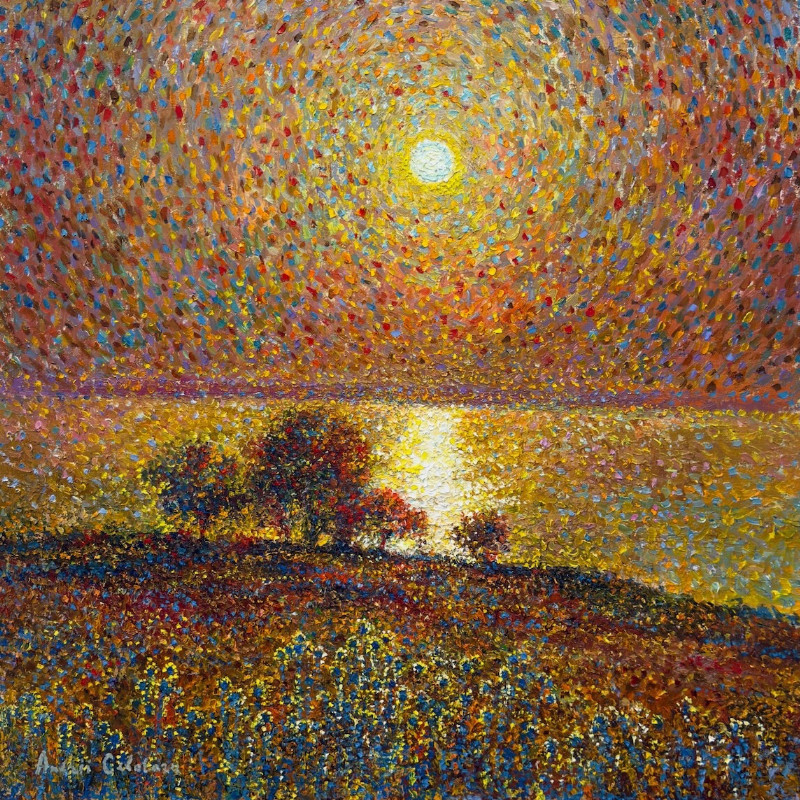 |
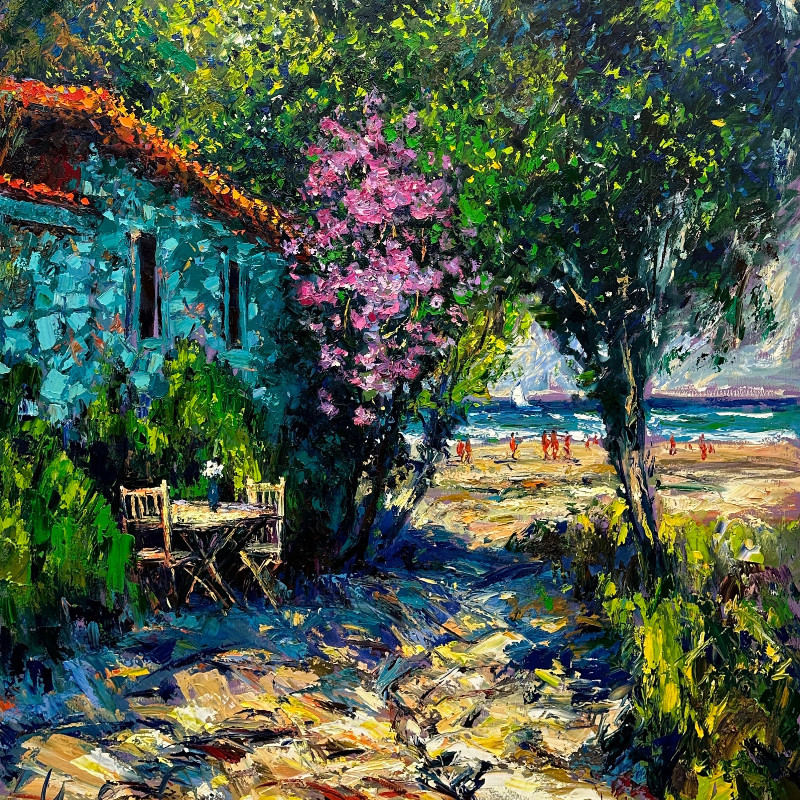 |
| Radiance of silence Andrii Chebotaru 90 × 100 cm · $6,800 View artwork → |
Fairy day in Marmaris Andrii Chebotaru 145 × 125 cm · $12,240 View artwork → |
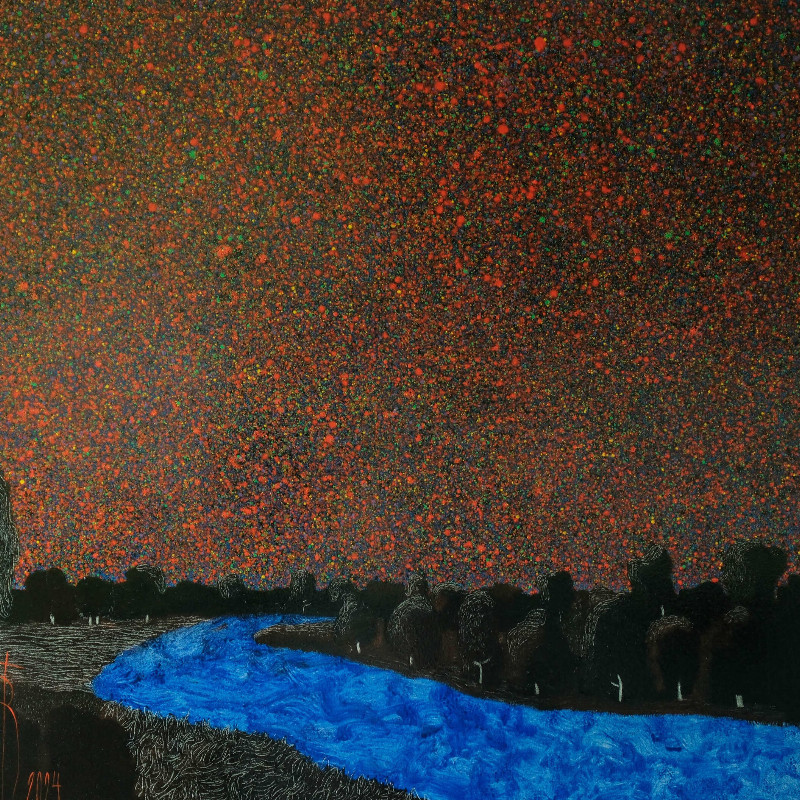 |
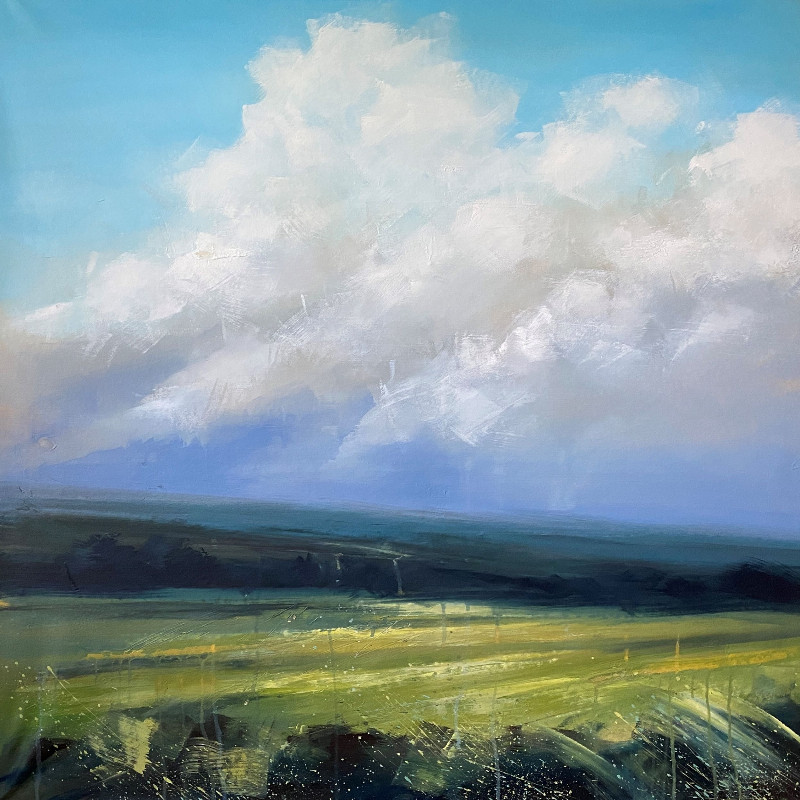 |
| Yamburg, Dnipro Taras Tryndyk 115 × 135 cm · $6,800 View artwork → |
Breathe Slowly/2 Helen Mount 90 × 90 cm · $1,183 View artwork → |
Choosing by mood: river, forest, winter and night
The subject decides how a painting will feel in a room long before the style does, so it helps to start with the mood you want to live with.
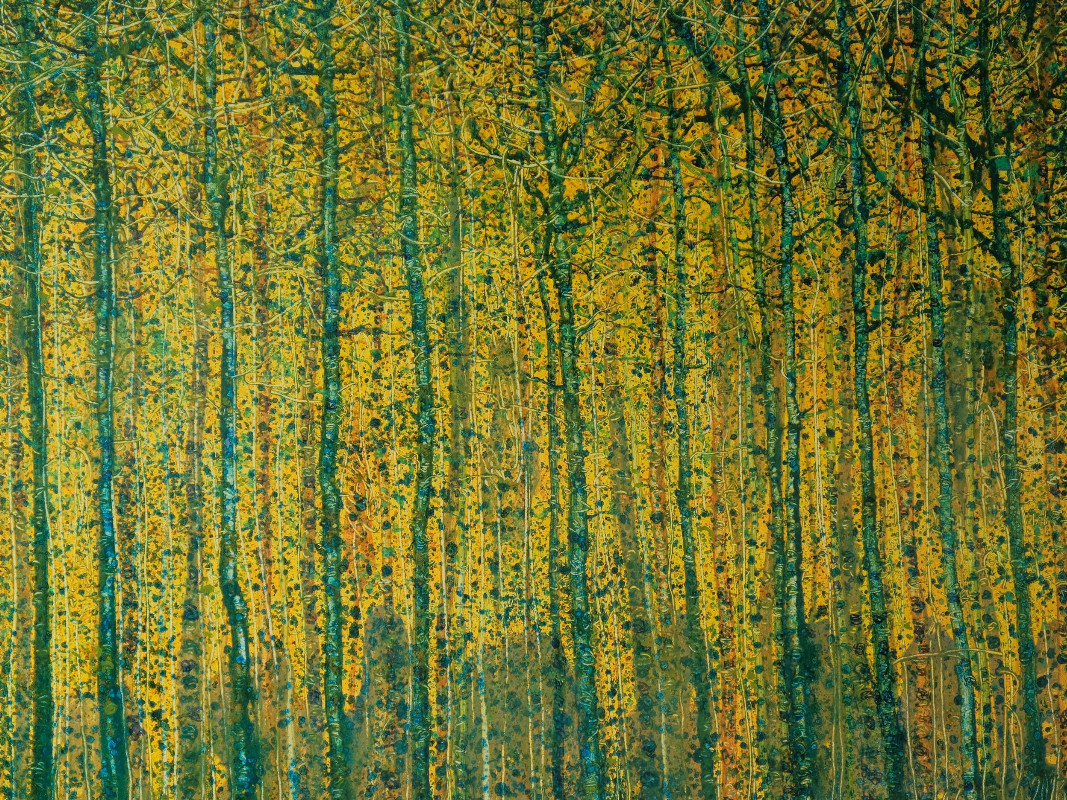
Water brings calm. River landscape paintings feel close and private, with reflections and a far bank in view, while the sea opens the picture to a horizon and lets the eye rest at a distance. A forest does the opposite: it encloses you. Rows of trunks give depth and a steady vertical rhythm, which is why forest scenes work so well in a study or a reading corner.
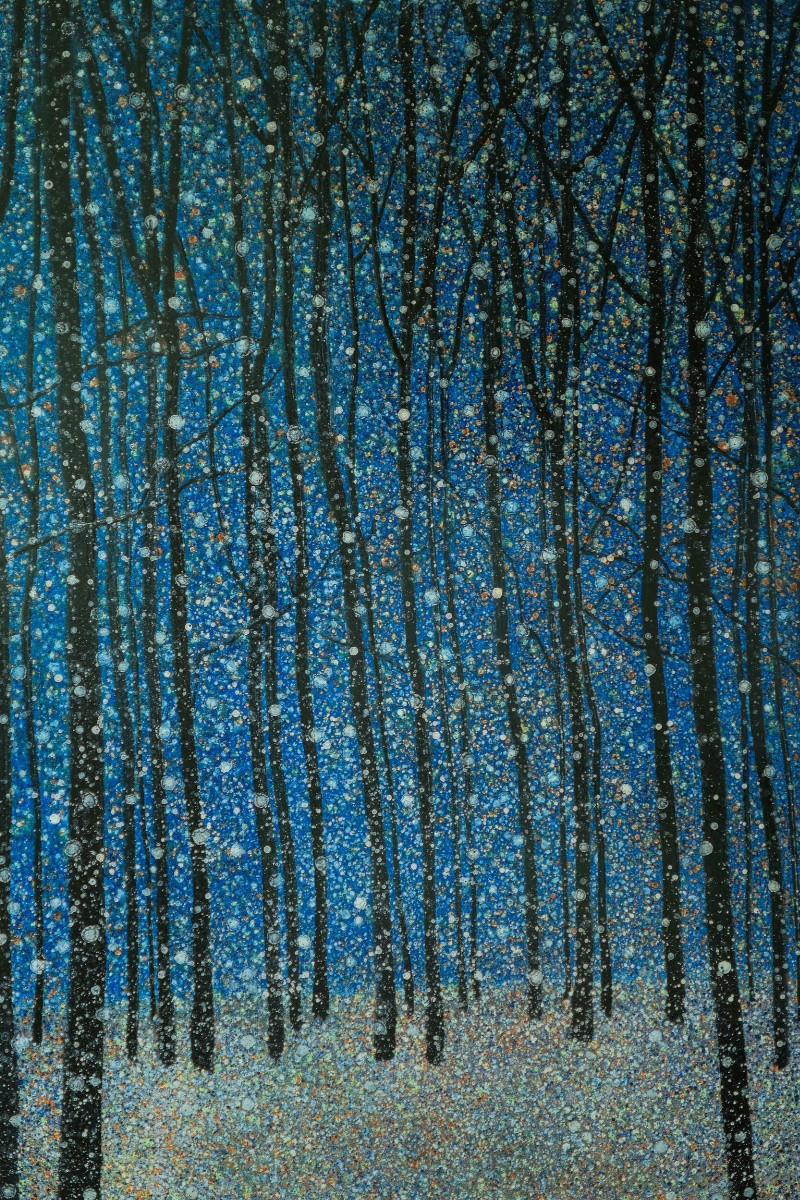
Winter is the most underrated season in landscape painting. Snow softens every edge, the palette narrows to whites, blues and grays, and the result can cool a room full of warm wood and fabric. Winter landscape paintings often turn out to be the most restful to live with.
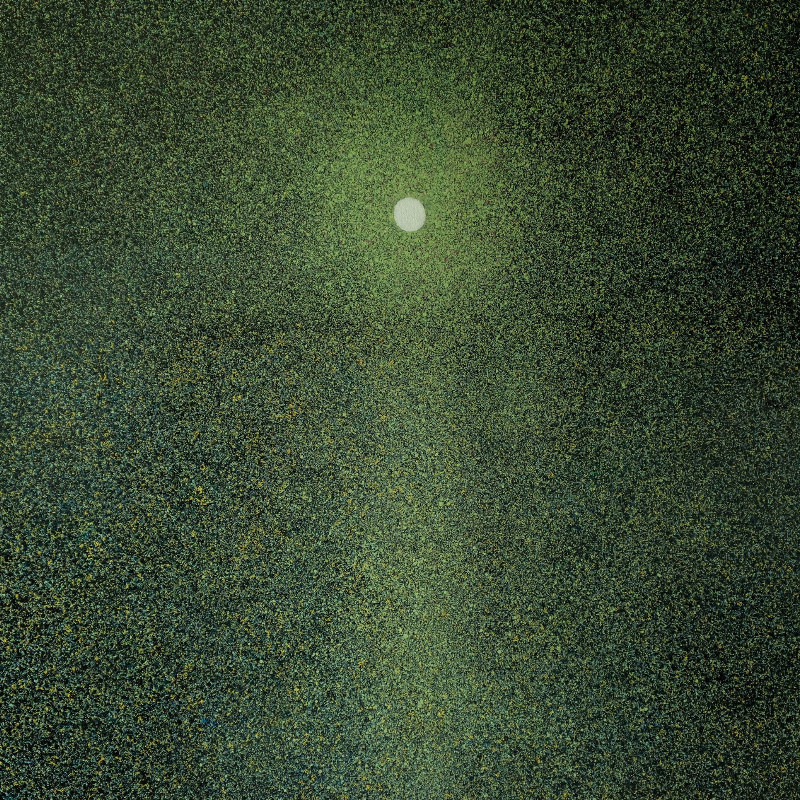
Night landscape paintings are the most atmospheric of all. Moonlight on water or a single light far away gives a room a reflective mood that suits the evening hours, when you are most likely to sit and look. Sunset scenes do the reverse and bring warmth to the places where people gather.
If you are also deciding how large the painting should be, our guide on how to choose extra-large wall art for your living room walks through scale and placement.
Oil on canvas or acrylic landscape paintings?
Most original landscape oil paintings are painted on canvas, and the combination has lasted for centuries for good reason. Oil dries slowly, so the painter can blend on the canvas and build thin, translucent layers. Shadows look deep, skies seem to glow from within, and the surface keeps a soft sheen. Laid on thickly, oil also holds the mark of the brush in raised ridges, which is a large part of why oil on canvas landscape paintings feel so physical in a room.
Acrylic dries in minutes. From across the room a landscape oil painting and an acrylic one can look alike, but up close acrylic usually reads brighter and flatter, with crisp edges and a more even finish. Many contemporary painters choose it for exactly that clarity. Neither is better; they simply speak in different voices, and it is worth knowing which one you are hearing.
How to tell an original from a print
You do not need to be an expert to check. A few minutes and your phone’s flashlight are enough:
- Light from the side. Hold the light low across the surface. Raised brushstrokes and uneven paint point to an original. Some prints are “hand-embellished” with a few strokes of gel, so check whether the texture follows the whole image or only a few highlights.
- The edges and the back. Paint on an original often wraps the sides unevenly, and the back shows raw canvas and wooden stretcher bars.
- The signature. A painted signature sits on top of the paint with its own slight relief; a printed one is part of the flat image.
- The words in the listing. “Oil on canvas” or “acrylic on canvas” describes a painting. “Giclée”, “canvas print” or “reproduction” describes a copy.
Where to buy original landscape paintings online
When you buy original paintings online, you give up the chance to stand in front of the canvas, so the seller has to make up for it with information. Before you pay, you should be able to see the medium and the size as height × width, a photograph of the work on a wall so you can judge its scale, a certificate of authenticity, clear shipping and returns terms, and a way to reach a real person with questions. If any of these is missing, ask. A good seller will answer.
That is also the simplest answer to where to buy original paintings: from a gallery or marketplace that shows you all of this up front. On ArtXchange every work lists its medium and size and ships with a certificate of authenticity; the shipping and returns terms are on the site before checkout, and you can write to us about any work. You can browse the current original landscape paintings for sale by contemporary Ukrainian artists.
 |
 |
| February Snow Taras Tryndyk 135 × 95 cm · $5,440 View artwork → |
Azure Moon Taras Tryndyk 105 × 135 cm · $5,440 View artwork → |
 |
 |
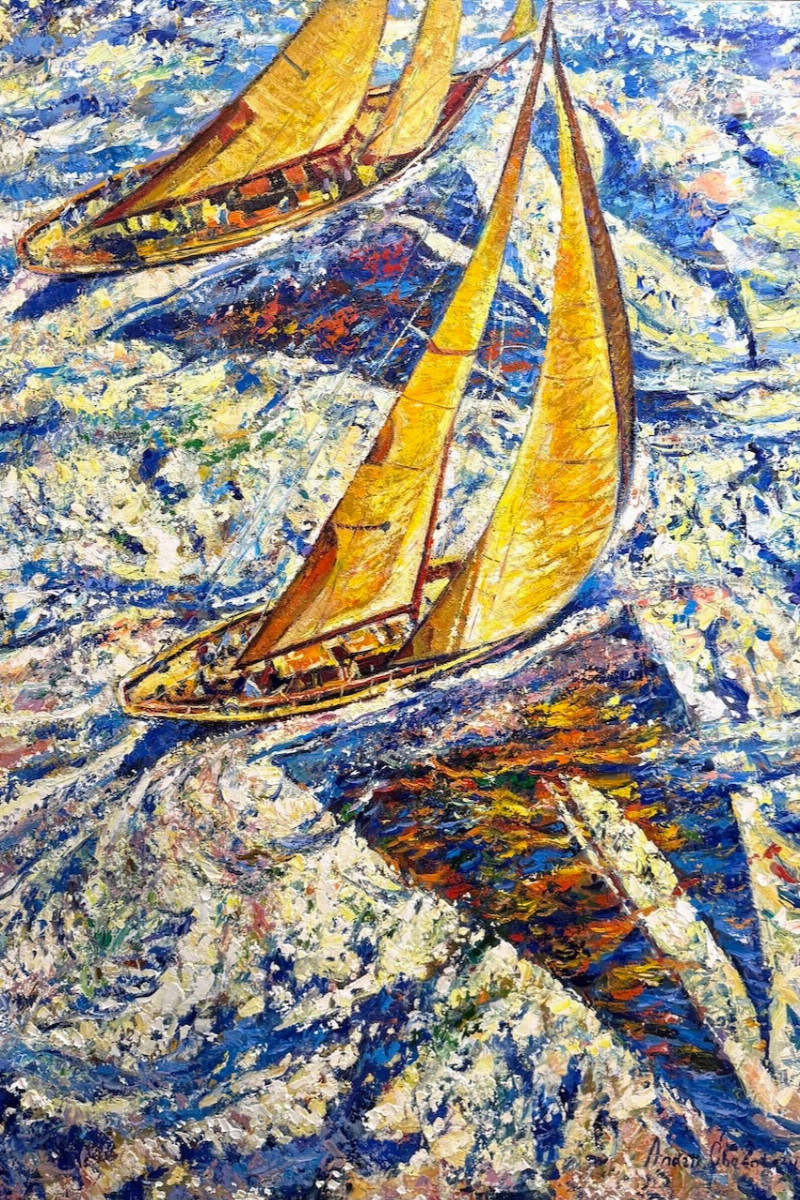
| Sails of freedom Andrii Chebotaru 130 × 100 cm · $7,480 View artwork → |
The Golden Forest Taras Tryndyk 105 × 135 cm · $5,440 View artwork → |
A view you will keep
The right original landscape art is rarely the most impressive canvas in the catalog. It is the one you keep finding yourself looking at. Start with the mood you want the room to have, let the style follow, and check the medium, the size and the certificate before you buy. After that, the painting does the work a window would, and it keeps doing it for years.
Frequently asked questions
What’s the difference between an original painting and a print?
An original painting is made by hand with paint on canvas, panel or paper, and only one exists. A print reproduces an image by machine, usually inkjet (giclée) or offset, and can be made in many copies. Originals show real brushstrokes and texture; most prints have a flat surface, even when the image looks the same.
How can you tell if a painting is a print or original?
Shine a light across the surface from the side: raised brushstrokes and uneven paint suggest an original. Check the edges and back for unevenly painted sides and raw canvas, look for a painted signature rather than a printed one, ask for a certificate of authenticity, and read the listing for words like giclée, print or reproduction.
Are prints of original paintings worth anything?
Most open-edition prints and posters have little resale value, because more copies can always be made. Signed, numbered limited editions by established artists can hold value, and hand-pulled prints such as etchings and lithographs are collected as artworks in their own right. A digital reproduction is usually bought as decoration and rarely resells for much.
Why are original paintings so expensive?
An original is a single object that took an artist many hours, often weeks, to plan and paint, using canvas, stretcher bars and artist-grade paint. Its price also reflects the artist’s training, exhibition record and the demand for their work. A print spreads the cost of one image across many copies, so each copy costs less.