
Walk into a new hotel lobby, a restaurant or a workplace in 2026 and you will notice that the art is rarely an afterthought. It is warmer in colour, more tactile, more local and more often built into the space itself. This guide gathers what design forecasts and a designer survey say about 2026, then translates it into practical questions for choosing original art.
Short answer: hospitality art trends for 2026 point five ways: art built into lobbies, corridors and stairwells; regional artists with a real link to the place; warmer, richer colour; visible texture and craft; and physical originals (paintings, sculpture, drawing, photography) over digital art. For a hotel or restaurant brief, settle scale, palette and surface before style.
- Art that is built into the space, not only hung on it
- Local artists and a sense of place
- Warmer, richer colour
- Texture and visible craft
- Paintings, sculpture, drawing and photography lead
- From trend to brief: a table with examples on ArtXchange
Where these trends come from
We draw on three published sources from 2026. Each has a point of view, so we name it. The Wimberly Interiors hospitality forecast is a press release from a design firm, which means it is a forecast and not independent research. The 1stDibs guide to 2026 designer trends reports a survey of designers on a marketplace for vintage and design objects. The Construction.co.uk hospitality article, dated 16 March 2026, is written from a contract furniture supplier's perspective and partly promotes its products.
Read them as signals, not as rules. The paragraphs called "Our reading" are our interpretation for people who choose art.
1. Art that is built into the space
Wimberly Interiors expects art to be integrated rather than only hung: sculptural walls, three-dimensional pieces and site-specific installations that turn lobbies, corridors and stairwells into part of the story a guest moves through.
Our reading: for a framed painting, the same idea means treating the wall as part of the composition. Think about the sightline from the entrance, the height of the lobby and where a guest pauses, before you pick the work.
2. Local artists and a sense of place
The same forecast describes a move away from a "global generic" look towards hyper-local design: collaborations with regional artists and ateliers, vernacular materials and craft traditions, and rotating works that give returning guests a reason to look again. Some historic hotels already work this way. Introducing its 2025 list of the most notable art collections in member hotels, Historic Hotels Worldwide says many of them collect with the aim of supporting local artists and heritage preservation.
Our reading: ask whether an artist has a real connection to the place or story of the project. Where a regional link is not possible, a clear idea behind the work still gives a space a point of view.
3. Warmer, richer colour
The hospitality article describes warmer, richer neutrals replacing cool greys, naming sand, taupe, espresso, olive, terracotta and deep burgundy, and says deep greens can create intimacy in restaurants. The designer survey reports burgundy and chocolate brown as favourites, and expects colour drenching, where walls, trim and ceiling share one hue, to be big.
Our reading: against a drenched or dark wall, a painting needs enough contrast and a strong colour relationship to hold its own. A warm ground can make a work with cool accents stand out.
4. Texture and visible craft
Layered textures, woven fabrics, bouclé and hand-finished details recur across the sources, as do curved, sculptural forms in place of sharp lines. Wimberly also expects digital tools and craftspeople to work together, so that surfaces feel handmade rather than machined.
Our reading: an original painting with visible brushwork, relief or a physical surface fits this mood well, because it brings the hand of the artist into a room that is full of manufactured surfaces. This is also why good detail photographs matter when you choose art online.
5. Paintings, sculpture, drawing and photography lead
In the 1stDibs survey, designers named paintings, sculpture, drawings and photographs as the most favoured art forms for 2026, with mixed media also showing some interest. Digital art and NFTs remain niche, stuck in the single digits for several years.
Our reading: for most projects, physical original work is still the safest centre of an art plan, and other media can be added deliberately.
| Trend | What it means for a brief | Example on ArtXchange |
|---|---|---|
| Art built into the space | Where will the eye land first, and what scale does that wall need? Give the wall size and the sightline from the entrance. | Trust, Stanislav Motornyi, 250 × 50 cm: a tall format for a column, stairwell or narrow wall |
| Local identity | Does the artist or the idea connect to the place, the brand or the story? | Yamburg, Dnipro, Taras Tryndyk, 115 × 135 cm: a painted view of a real city |
| Warm, rich colour | Will the palette hold against a dark or drenched wall? Send the paint colour of the wall with the brief. | Warm Memory, Helen Mount, 90 × 90 cm: earthy sand and ochre tones |
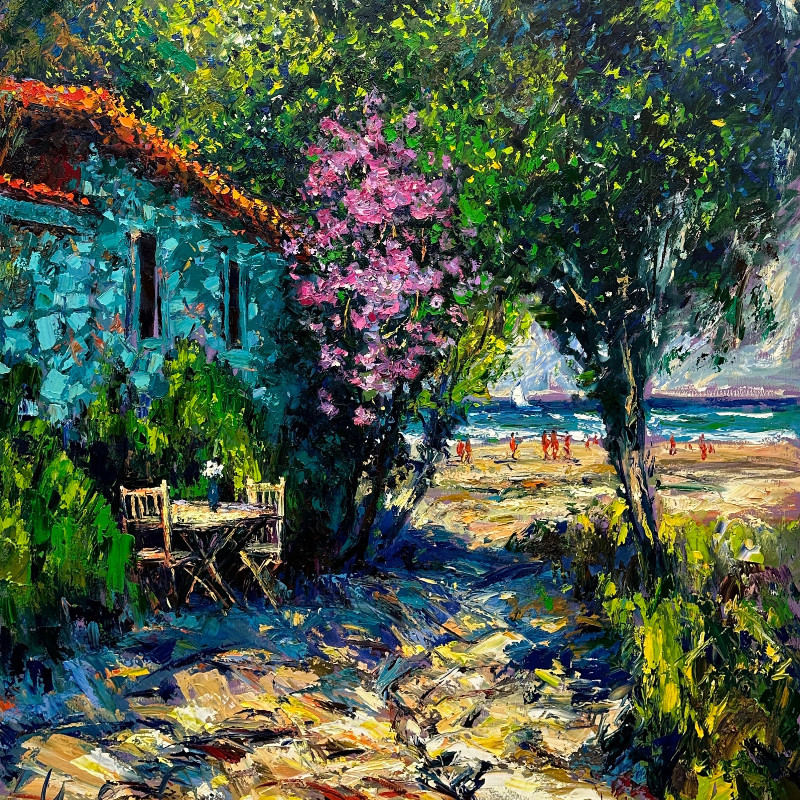
| Texture and craft | Is the surface visible and interesting at the viewing distance of the room? Ask for detail photographs. | Fairy day in Marmaris, Andrii Chebotaru, 145 × 125 cm: impasto oil |
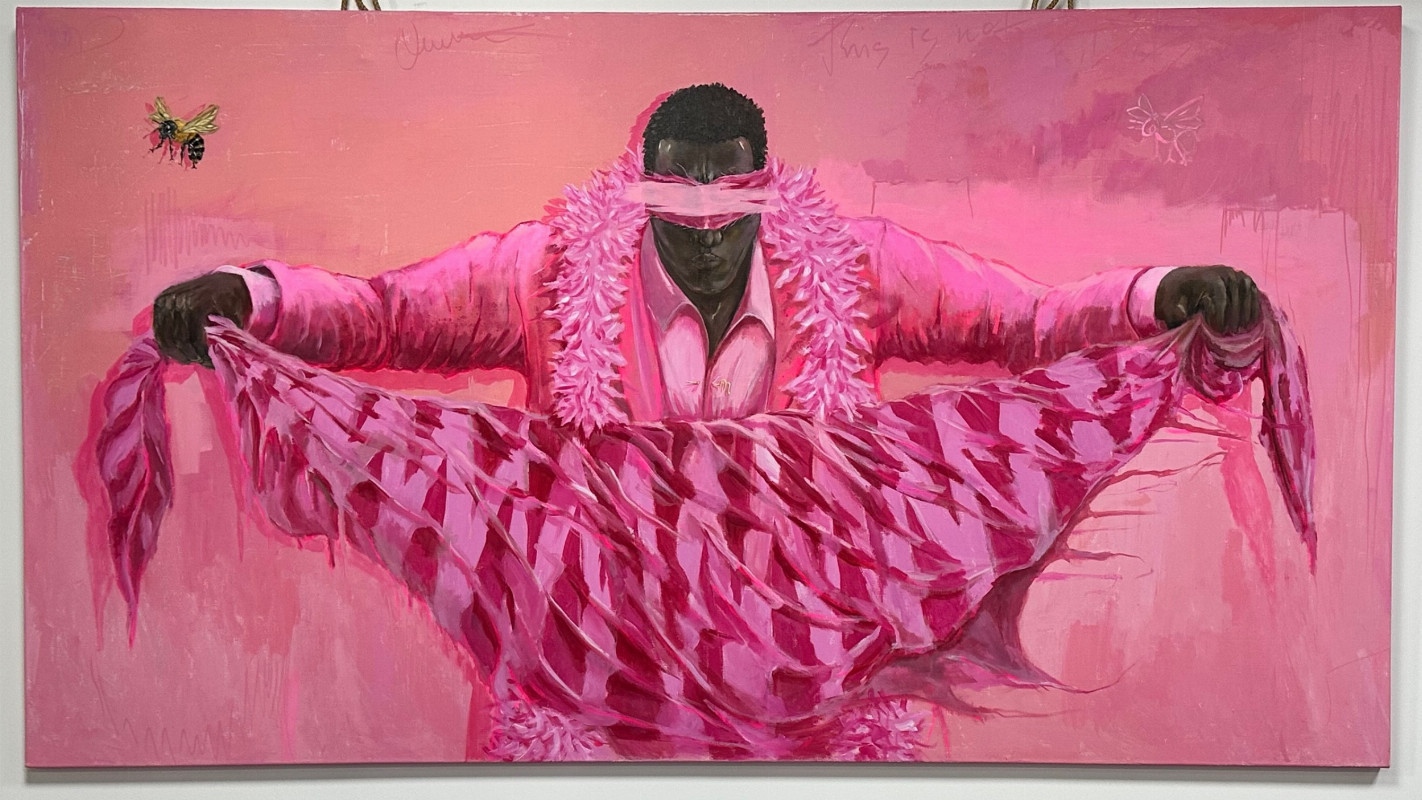
| Original media | Is it a unique original, and what is the certificate and condition? | Pink on the bee, Stanislav Motornyi, 120 × 200 cm: original in acrylic and oil |
Examples on ArtXchange
A bold, colourful painting on a dark ground reads clearly against a raw concrete wall. Breath of life - skull of death by Stanislav Motornyi is listed at 150 × 120 cm, a scale that suits a statement wall. If you are sourcing for a hotel, restaurant or workplace project, you can contact us to discuss it.
The six works below match the trends above: a tall format for an architectural wall, two landscapes tied to real places in Ukraine (Dnipro and the Odesa region), a warm earthy palette, a thick impasto surface and a large original in mixed acrylic and oil.
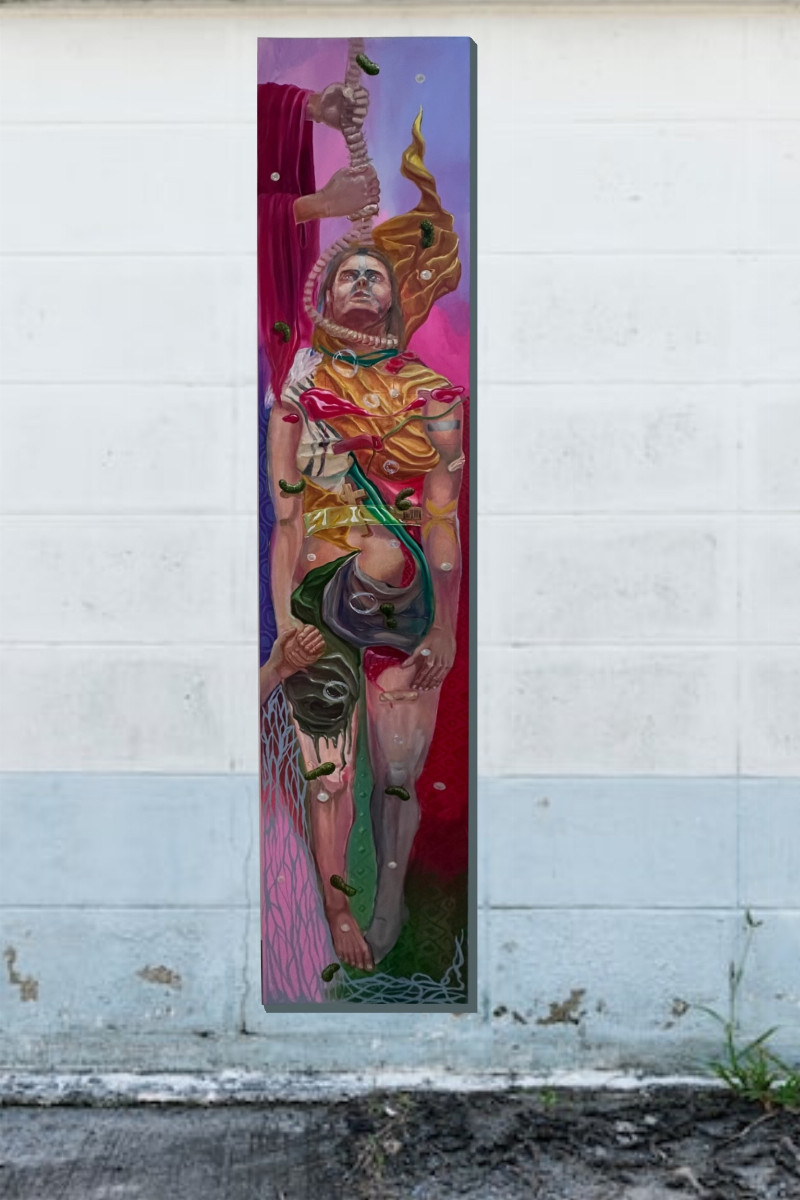 |
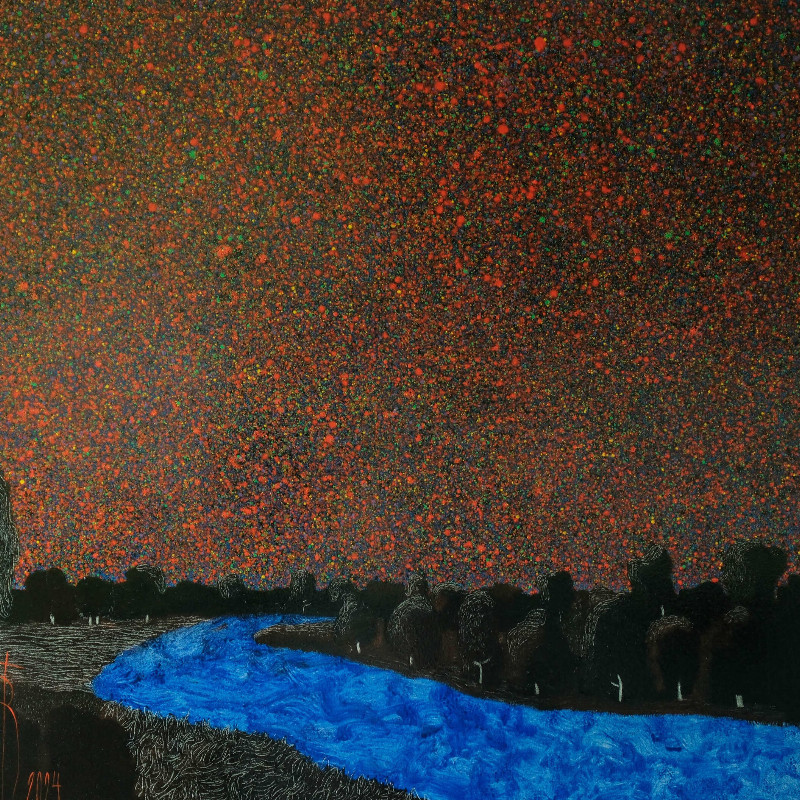 |
| Trust Stanislav Motornyi 250 × 50 cm · $11,866.37 View artwork → |
Yamburg, Dnipro Taras Tryndyk 115 × 135 cm · $6,800 View artwork → |
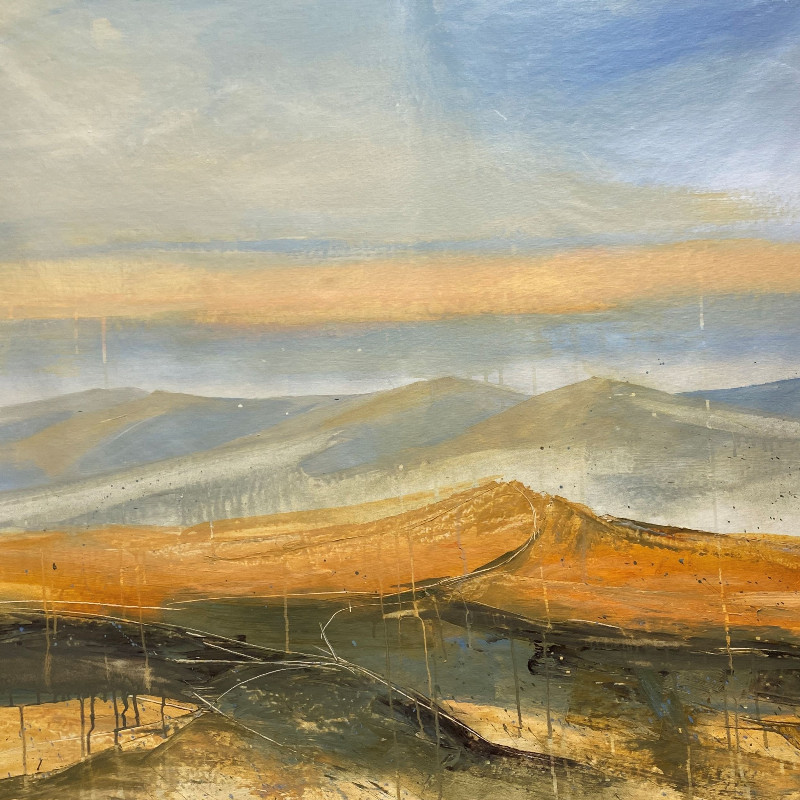 |
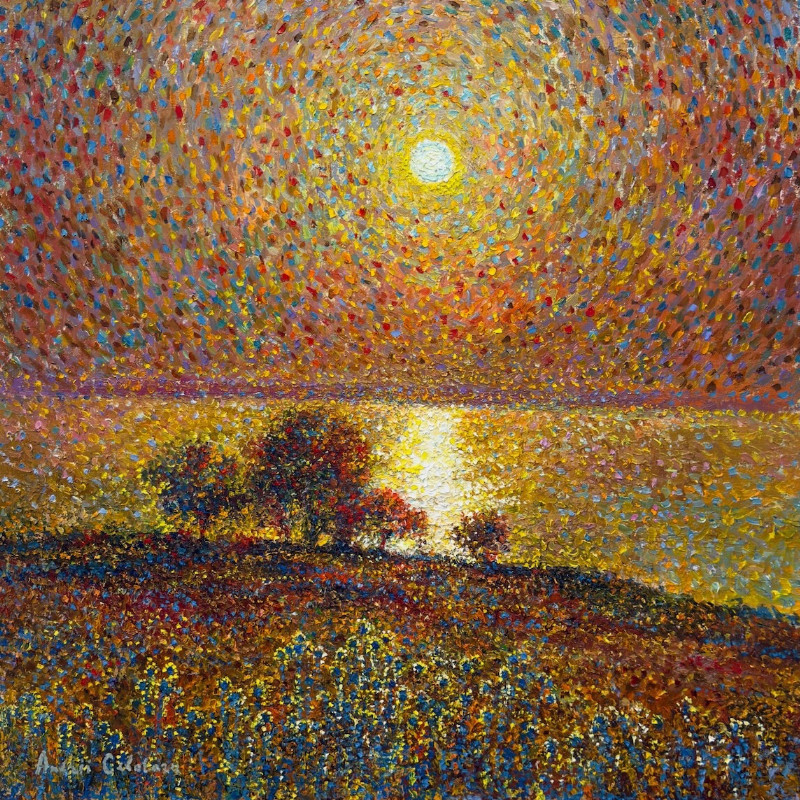 |
| Warm Memory Helen Mount 90 × 90 cm · $1,183.20 View artwork → |
Radiance of silence Andrii Chebotaru 90 × 100 cm · $6,800 View artwork → |
 |
 |
| Fairy day in Marmaris Andrii Chebotaru 145 × 125 cm · $12,240 View artwork → |
Pink on the bee Stanislav Motornyi 120 × 200 cm · $13,461.27 View artwork → |
For designers and hospitality buyers
On the For Trade page you can share a project brief, moodboard or design direction, and the team prepares a selection that fits the concept, the space and the budget, then coordinates timelines and delivery. Trade terms listed there: 15% off orders over $5,000 retail value, room visualisation mockups for client presentations, a 14-day return window after delivery, and 100% payment upfront.
FAQ
What are the main art trends for commercial interiors in 2026?
According to the sources above: art that is integrated into the space, local artists and a sense of place, warmer and richer colour, visible texture and craft, and a continuing preference for paintings, sculpture, drawings and photographs.
Are these trends reliable?
They are forecasts and survey results from firms with their own interests, so treat them as signals. Choose art for the project and the people who use it, not only for a trend.
Is digital art popular with designers?
In the 1stDibs survey, digital art and NFTs remained niche, with low single-digit interest for several years.
What kind of art works best in hotels and restaurants?
Work chosen for the specific wall, light and viewing distance. For 2026 the sources point to physical originals with visible texture, warm palettes that hold against darker walls, and pieces with a link to the location. Large formats suit lobbies and statement walls; tall, narrow ones suit columns and stairwells.
How do interior designers source original art for a commercial project?
Most start from a brief: wall sizes, palette, budget, deadline and the story of the place. On ArtXchange a designer can pick works from the catalogue or send a brief or moodboard through For Trade and receive a selection, with room mockups for client presentations.
Sources
- Wimberly Interiors 2026 Hospitality Design Trends, Hospitality Net (forecast published as a press release by the design firm)
- The 1stDibs Guide to 2026 Designer Trends (survey of designers)
- Hospitality Interior Design Trends 2026, Construction.co.uk, 16 March 2026 (written from a furniture supplier's perspective)
- The 2025 Top 25 Historic Hotels Worldwide Most Magnificent Art Collections List, Historic Hotels Worldwide, 16 June 2025
- Breath of life - skull of death, ArtXchange
- For Trade programme terms, ArtXchange